
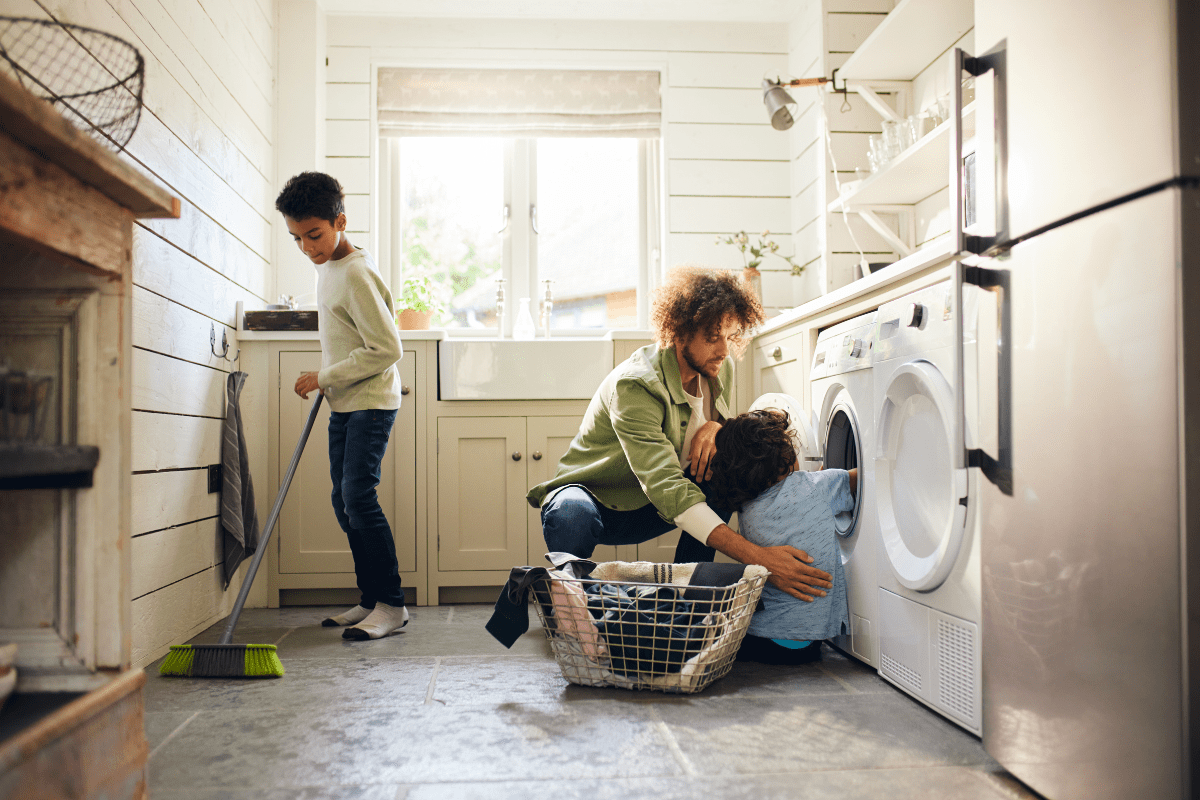
It's 7:30 PM and you're picking up the same toys for the third time today while your kids zone out in front of screens. You know they should be helping, but figuring out what's actually reasonable to expect from a 4-year-old versus a 14-year-old feels like solving calculus. Here's the thing: research shows that chores are one of the best predictors of adult success, but only if we get the age-appropriate part right.
What your kids can actually handle (and when)
Let's cut to the chase. You want to know what your 6-year-old can reasonably do without you having to redo it three times. The good news? Kids are way more capable than most of us think.
Ages 2-3: The eager helper phase
Toddlers are basically tiny volunteers who think cleaning is the most exciting thing ever. Yes, they'll "help" by making bigger messes, but this is when you're building the foundation for everything that comes later.
At this age, your little one can handle putting toys away in designated spots. This teaches organization and the concept that everything has a home. They can also wipe up their own spills (even if you need to do it again later), which builds problem-solving skills and the crucial life lesson that we clean up our own messes.
Other realistic expectations include:
- Feeding pets with pre-measured food
- Putting dirty clothes in hamper
- Helping load washing machine
- Simple dusting with microfiber cloth
The key here is working alongside them. Don't expect independence… you're modeling what helping looks like. Make it playful. "Can you find all the red blocks and put them to bed in their box?"
Ages 4-5: The "I can do it myself" years
Preschoolers can remember 2-3 step instructions and desperately want to feel useful. This is prime time for building real responsibility while their enthusiasm is still high.
Setting the table becomes a lesson in sequence and family service. Start with non-breakable items like napkins and plastic plates. Making their bed teaches daily routines and caring for personal space. It doesn't need to look like a hotel… rumpled with the pillow vaguely in place counts as success.
Sorting laundry by color is perfect for this age because it combines a helpful task with learning categorization. They're also great at watering plants with a small watering can, which teaches nurturing and the responsibility that comes with caring for living things.
Additional age-appropriate tasks:
- Helping prepare simple snacks
- Packing up toys before transitions
- Using handheld vacuum on small messes
- Organizing books on low shelves
Use timers to make everything feel like a game. "How fast can we get all the blocks into their bin?" works way better than "Clean up your blocks."
Ages 6-9: Building real competence
Elementary kids can understand the "why" behind household maintenance and handle tasks that actually make a difference in how your home functions. This is when chores start feeling less like cute helping and more like genuine contribution.
Loading and unloading the dishwasher teaches kitchen safety and systematic thinking. Yes, you'll need to check that the knives are pointing down and that plates aren't blocking the spray arms, but they can absolutely handle this responsibility.
Folding and putting away their own laundry hits multiple life skills: clothing care, organization systems, and personal responsibility. Don't expect department store perfection… wrinkled but folded and in the right drawer is totally fine.
Taking out trash and recycling connects them to environmental responsibility and scheduling. Plus, it's a chore that has a clear beginning and end, which appeals to their concrete thinking.
The digital age additions:
- Organizing charging stations for family devices
- Wiping screens and keyboards
- Helping sort digital photos
- Basic cable management
Create rotation systems so nobody gets stuck with the same task forever. And start teaching the "why" behind each task. "We clean the bathroom so germs don't make us sick" makes more sense than "because I said so."
Ages 10-12: The leadership development phase
Preteens can work independently and even start teaching younger siblings. This is when you begin transferring real household management skills that they'll need as adults.
The complete laundry process, from sorting through folding, teaches life skill mastery and resource management. They learn about fabric care, stain treatment, and the reality that clean clothes don't magically appear.
Simple meal planning and cooking builds nutrition awareness, budgeting concepts, and family care instincts. Start with breakfast or lunch preparation, then gradually work up to planning and cooking family dinners.
Deep cleaning tasks like scrubbing bathrooms or organizing closets teach thoroughness and proper technique. They're old enough to understand that "clean" has standards and to take pride in doing something well.
Managing younger siblings' chores develops leadership and patience. There's something powerful about a 12-year-old teaching a 5-year-old how to fold washcloths properly.
Modern responsibilities include:
- Managing family digital calendar
- Researching purchases for family
- Troubleshooting basic tech issues
- Organizing digital files and photos
Give them ownership of specific household systems. "You're in charge of making sure we never run out of toilet paper" creates investment in the outcome.
Ages 13-18: Preparing for real life
Teenagers need to master every skill they'll need for independent living. Yes, they're busy with school and social stuff, but research consistently shows that teens who contribute meaningfully to household management are more successful in college and early adulthood.
Complete household management means they can handle any domestic task you can handle. Advanced cooking, budget management, car maintenance, home repairs… this is adulting bootcamp.
They should understand how much things cost and how to make financial decisions. Put them in charge of finding the best deals on family purchases or managing a specific budget category.
Digital leadership becomes crucial at this age. They can troubleshoot family technology issues, teach digital skills to younger siblings, and model responsible social media use.
The goal is gradual transfer of household management responsibilities. By senior year, they should be able to run the household for a weekend while you're away.
Why this actually matters (beyond having a cleaner house)
Here's what sold me on being stricter about chores: Harvard researchers followed people for 85 years and found that the best predictor of success in your twenties was whether you did chores as a young child. Not SAT scores, not which activities you did… chores.
The reason makes sense when you think about it. Chores teach executive function skills like planning, self-regulation, and task-switching. Studies show these cognitive abilities transfer directly to academic performance and problem-solving in other areas of life.
But there's an emotional component too. Kids who contribute meaningfully to family life develop what psychologists call "belongingness." They know they matter because the family actually needs their help to function well.
When kids resist (and they will)
Let's be honest… even the most well-intentioned kid is going to push back sometimes. Here's how to handle the most common resistance patterns without losing your mind.
The "it's too hard" complaint
Break tasks into smaller steps and work alongside them initially. If cleaning their room feels overwhelming, start with "put all the books on the shelf," then "put all the clothes in the hamper." Celebrate small improvements rather than waiting for perfection.
Use what child development experts call "shaping"… gradually increase your standards as their competence grows. A bed that's pulled up counts as made when they're learning. Six months later, you can expect the pillows to be straight too.
The "I don't want to" rebellion
Offer choices within non-negotiable expectations. "Do you want to set the table or clear it after dinner?" gives them control while maintaining your boundary that they participate in mealtime.
Connect chores to natural consequences rather than arbitrary punishments. "When the dishes are clean, we can start movie night" works better than "No TV because you didn't do dishes."
Model the attitude you want to see. If you grumble through your own household tasks, expect them to grumble too. Research on motivation shows that kids mirror our emotional approach to necessary work.
The "I forgot" excuse
Create visual reminder systems that don't require you to be the nagging parent. A simple checklist on the fridge or bathroom mirror can prompt action without parental reminders.
Establish consistent routines tied to other daily activities. "After breakfast, make your bed" becomes automatic faster than "sometime this morning, make your bed."
Use environmental cues. Put the laundry basket in their room on Sunday nights so they remember to bring dirty clothes down Monday morning.
Making it fun without losing the point
You want chores to be engaging enough that kids will actually do them, but not so game-ified that they think all work should be entertaining. It's a delicate balance.
Creative approaches that actually work include putting on energetic music during family cleaning time. Suddenly scrubbing the kitchen becomes a dance party, and folding laundry happens with a soundtrack.
Friendly competition can be motivating: "Who can pick up the most Legos in two minutes?" or "Let's see if we can get the living room clean before this song ends."
For the digital generation, apps like ScreenCoach connect chore completion to screen time privileges. Kids earn tokens for completing tasks, which can then be "spent" on device time. It's natural consequences with a tech twist.
Time-based challenges work well too. Set a timer and see how much they can accomplish. Most kids find racing against the clock more engaging than open-ended expectations.
But remember… the goal is building work ethic and life skills, not creating entertainment addicts who can't function without constant stimulation.
Digital age responsibilities
Modern kids need to learn technology management as a life skill, not just technology consumption. This creates opportunities for age-appropriate chores that didn't exist for previous generations.
Younger kids can be responsible for family charging stations and keeping devices organized. Elementary-age children can help with digital photo organization and basic device maintenance like wiping screens.
Older kids can take on family tech support, research responsibilities, and digital calendar management. Teaching digital citizenship through household responsibilities helps them understand technology as a tool for productivity rather than just entertainment.
The key is framing these as real responsibilities that help the family function, not just busy work to limit screen time.
Addressing the real parent concerns
Let me guess your objections, because I've had them all.
"It's faster if I just do it myself." True. In the short term. But research shows that kids who don't learn these skills struggle significantly in college and early adulthood. You're not just cleaning the house… you're teaching competence and self-reliance.
"My kid has ADHD and struggles with executive function." Perfect. Chores are executive function practice. Start smaller, use more visual cues, and break tasks into shorter segments. But don't skip this entirely… these kids need the skills even more than neurotypical children.
"We're too busy with activities." I get it. But consider this: kids who do regular chores perform better academically than kids who don't. Maybe the violin lessons aren't as crucial as learning to manage daily responsibilities.
"It feels like punishment." Research on intrinsic motivation shows that framing chores as family membership responsibilities (rather than arbitrary tasks) builds belonging and competence. "We all contribute because we all benefit from a well-functioning home."
Getting started without overwhelming everyone
Don't try to implement everything at once. That way lies madness and family rebellion.
Start with one age-appropriate chore per child and work alongside them for the first week. Focus on building the routine rather than perfecting the technique.
Add complexity gradually as they master the basics. Introduce quality standards slowly… "good enough" is actually good enough when they're learning.
Connect chores to existing routines rather than creating entirely new expectations. "After breakfast, clear your place and make your bed" piggybacks on something they already do.
Most importantly, notice and acknowledge their contributions. "Thank you for taking care of the dishes… it makes such a difference in how our kitchen feels" reinforces that their work matters.
The goal isn't a perfect house… it's raising kids who know how to take care of themselves, contribute to community, and approach necessary work with competence rather than helplessness. And honestly? Once you get the systems in place, family life gets a lot easier when everyone's pulling their weight.
Start small, stay consistent, and remember that you're not just dividing up household tasks. You're teaching life skills that will serve them well long after they've moved out of your house.